
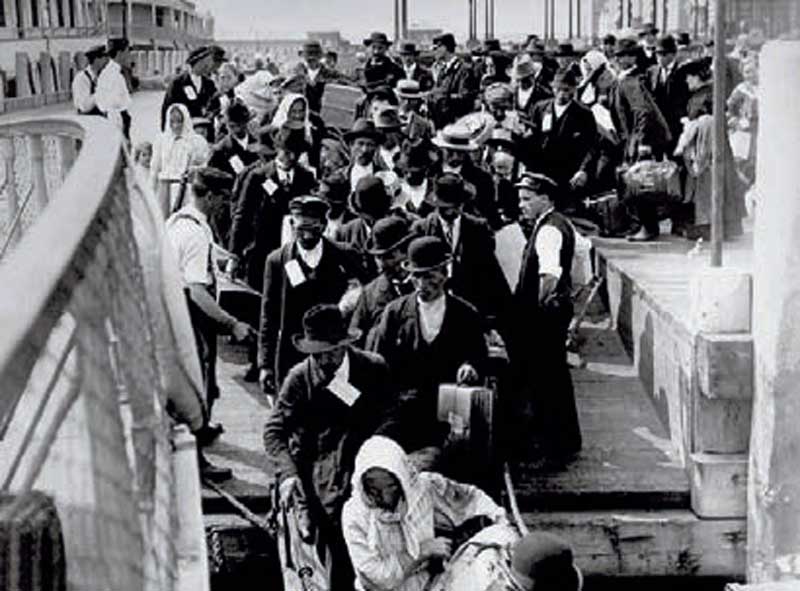
In 1907, at the age of 16, Biagio emigrated to the U.S. with paternal cousins, Attilio, 17, and Amelio, 32. Steamship companies hawked $30 tickets, often sold by traveling salesmen.
From the port of Le Havre, France, the intrepid trio shipped out aboard the SS La Bretagne. Crammed shoulder to shoulder with 591 other poor passengers in steerage class, in the ship’s lower deck, they endured eight rocky days at sea.
Biagio, according to the ship’s manifest, stood an inch shy of 5 feet tall. In his pocket he’d stuffed his life’s savings, $25. Biagio possessed two advantages over many of his shipmates: He could read and write.
He and his cousins must have been excited and relieved when they finally entered the New York Harbor, steaming past the Statue of Liberty, America’s beacon of hope.
Processed at Ellis Island, N.Y., on July 15, the Magelli cousins headed straight to Ladd, Illinois. On arrival, they stayed with Attilio and Amelio’s older brother, Pompeo, who’d emigrated to the U.S. in 1902 at the age of 25.
The newcomers hoped to find jobs in Illinois’ growing number of coal mines, established by railroad companies to keep their steam-powered locomotives barreling from coast to coast.