
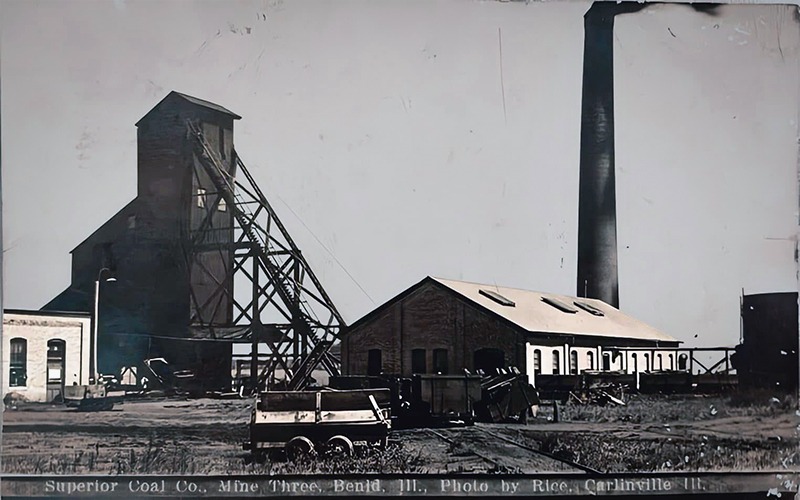
With only a carbide lamp on his helmet, Grandpa Magelli toiled 500 feet underground in one of Illinois’ underground coal mines, loading chunks of black gold onto mule-drawn carts.
“In 1920, Macoupin County in Central Illinois had 19 operating coal mines employing 6,500 workers and producing more than 6.3 million tons, about 10 percent of the state’s total.
“The mines were largely responsible for drawing a diverse ethnic mix to the downstate rural county. Italians, Scots, Welsh, English and Croatian immigrants were among those who came to work underground and settle towns like Gillespie, Benld and Mount Olive, south of Springfield.”
“Many of those immigrants found jobs at the four Superior Coal Co. mines clustered in southeast Macoupin. Established in the early 1900s, all the mines’ production was used to stoke the steam engines of the Chicago and Northwestern Railroad, which owned Superior Coal Co.”
“At their peak in 1926, the Superior mines employed 3,000 men, and by the time the last of them closed in 1954 they had produced a total of 122 million tons. But when the railroad switched to diesel locomotives, the coal was no longer needed.
“In the 1930s, Macoupin County was also one of the major battlefields of organized labor. Union miners were pitted against the coal companies in frequent and sometimes violent strikes.”
Editor’s note: Grandpa Magelli worked the No. 3 mine in Mt. Clare, one of five area mines. Regrettably, the very mining jobs on which many immigrants supported their families eventually led to serious injuries and death from black-lung disease, which claimed grandpa’s life.
~ Reprinted from September 1995/ Illinois Issues /95